Most buyers treat the option period as a checkpoint: get the inspection, review the report, decide whether to proceed. In 78704, that sequence is backward — and for buyers targeting the older housing stock in Travis Heights and Bouldin Creek, the order of operations matters more than almost anything else in the transaction.
The Seller's Disclosure Notice arrives before the inspector does. It tells you, in the seller's own words, what this house has already been through. On a home built in the 1940s sitting on pier-and-beam above Central Texas clay, that document is not a formality. It is a diagnostic tool. Read it that way, and the inspection becomes a targeted investigation. Skip straight to the inspection without it, and you may find yourself paying for a general exam when what you needed was a specialist.
That reframe is the thing most guides on this topic miss.
Read the Disclosure Before You Book the Inspector
Texas Property Code Section 5.008 requires sellers of single-unit residential properties to deliver a Seller's Disclosure Notice completed to the best of their knowledge. The form covers structural conditions, mechanical systems, environmental hazards, and prior damage history. For 78704 bungalows, the structural section is the place to start.
If a seller has had foundation work done, Texas law requires them to disclose the work, the company that performed it, and whether a transferable warranty exists. A seller who discloses prior pier leveling, a history of plumbing leaks in a specific zone, and a prior HVAC replacement has handed you an inspection agenda. Those items tell you exactly which specialist assessments are worth ordering during the option period — and which general line items on the inspector's report are noise.
Real estate disclosure disputes accounted for roughly 12% of all residential litigation filed in Travis County in 2025. That number reflects what happens when buyers don't calibrate their due diligence to what the disclosure already contains, or when sellers minimize disclosures they should have made clearly.
The disclosure also tells you what the seller does not know. On an estate sale or a property held by an absentee owner, many sections will read "Unknown." That is not evasion — it is legally honest, and it signals that the inspection must do the work the disclosure could not.
What Travis Heights and Bouldin Creek Homes Are Built On
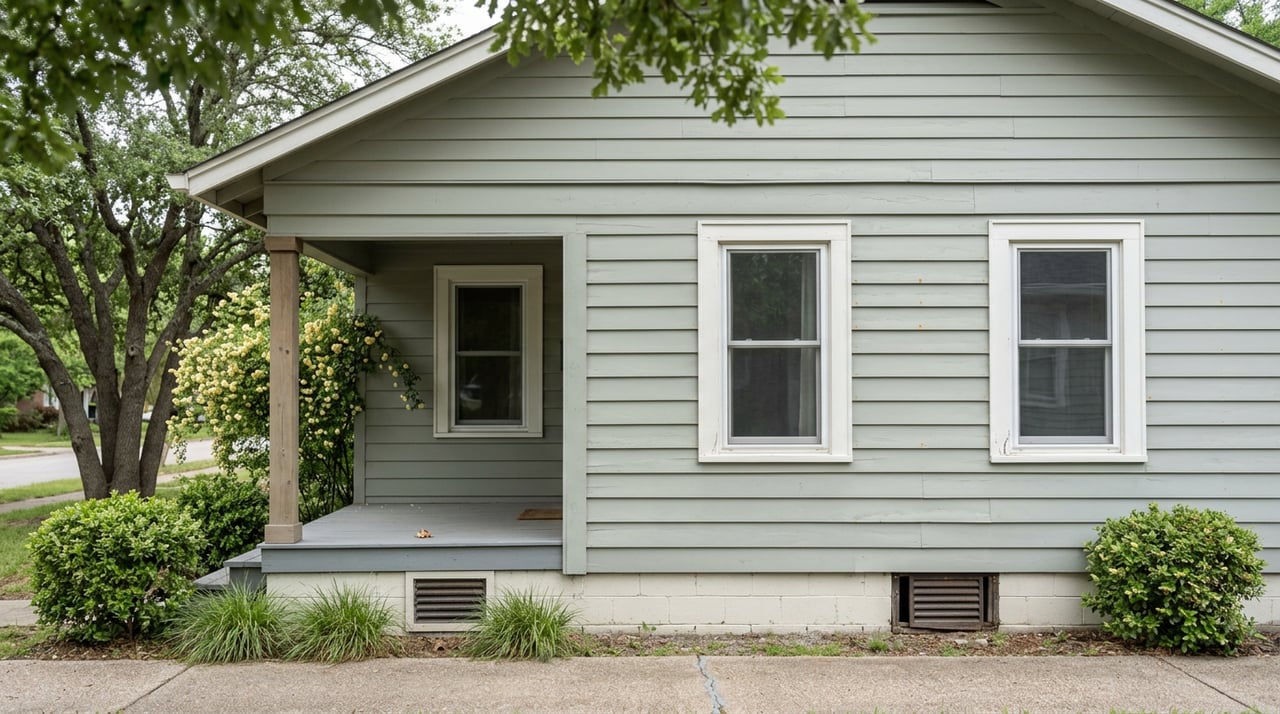
South Austin's most sought-after bungalows sit in Travis Heights and Bouldin Creek, a housing stock built predominantly between the 1920s and 1960s. These neighborhoods feature a mix of pier-and-beam bungalows and early slab homes. That mix matters because each foundation type requires a different inspection approach and carries different disclosure implications.
Pier-and-beam homes have a crawl space beneath the structure. The inspection is more involved — pier-and-beam inspections typically cost $100 to $200 more than slab inspections because the crawl space examination adds time and may require protective equipment. More importantly, what the inspector finds there is qualitatively different. Original limestone piers can be in excellent condition while the floor beams above show moisture damage. The structure reads fine from the living room; the crawl space tells another story.
The soil beneath both foundation types is Taylor Black Clay, which shrinks up to 30% in volume when moisture content drops from saturated to dry conditions. Austin's alternating droughts and heavy rain cycles stress every foundation system over time — each cycle compounds the previous one. A home that came through the 2011 drought with minor cracking may have developed progressive weakening that worsened during the 2022-2023 drought. The disclosure should reflect that history. If it does not, the inspection should probe it directly.
| Disclosure item | What it signals in 78704 stock | Specialist to add |
|---|---|---|
| Prior pier leveling disclosed | Active or historical foundation movement | Structural engineer, Level B evaluation |
| "Unknown" on foundation condition | Estate sale or absentee owner | Foundation inspection as standard, not optional |
| Plumbing leak in specific area | May correlate with crawl space moisture | Plumber plus crawl space review |
| Prior foundation work, warranty listed | Warranty transfers — if company still exists | Verify contractor is still operating |
The 2026 Disclosure Form Has a New Item Worth Your Attention
In February 2026, TREC proposed updates to the Seller's Disclosure Notice, with the earliest adoption date of March 29, 2026. The most consequential change for buyers of older South Austin homes is the new insurance coverage disclosure. In recent years, several major carriers have reduced or pulled coverage in Texas, particularly for properties with older roofs or prior claims. A property that cannot be insured conventionally — or can only be covered through the Texas FAIR Plan at elevated premiums — creates a financing problem before it creates a cost problem. Most lenders require proof of acceptable hazard insurance before funding.
A bungalow with a 1950s-era roof that has had two hail claims may trigger this issue. Ask about insurance status early, and confirm insurability with at least two carriers before the option period expires.
What "Transferable Warranty" Actually Means in Practice
When a seller discloses prior pier work and checks "yes" on the transferable warranty, buyers often assume that protection moves to them at closing without condition. It does move — with a significant catch. A pier warranty is only as good as the life of the company that issued it, and many foundation repair contractors do not survive long enough for that warranty to be exercised.
Before accepting a prior repair as a resolved item, verify the repair company is still operating. Request the original engineering report and contractor documentation the seller is required to disclose. If the only documentation is the contractor's own paperwork without an engineer-of-record, budget for an independent structural evaluation during the option period.
The Market Window and Why It Creates Leverage Here
In March 2026, 78704 home prices were down 6.2% compared to the prior year, with a median sale price of $798K and homes averaging 117 days on market, down from 140 days the year before. Across the Austin metro as of May 14, 2026, 50% of active listings have undergone a price reduction and the sold-to-list price ratio sits at 97.91%, while pending contracts are up 3.5% year-over-year and new listings are down 4.1%.
Read those two data points together: sellers are still conceding ground, but buyer demand is absorbing inventory faster than new supply is entering the market. The leverage available today is real — and it is not permanent.
Buyers who use the option period as a negotiation instrument now, rather than simply an exit option, are the ones positioned to extract actual value. A seller concession tied to a specific engineering finding carries more weight in any post-closing dispute than a general price reduction with no documented basis. Request the repair documentation, the contractor, and the timeline in writing.
A Sequenced Approach to the Option Period
Request and read the disclosure before booking the inspection. Note every "Yes" and every "Unknown" in the structural section. Build a list of what requires specialist attention versus general review.
Schedule the general inspection with pier-and-beam crawl space access confirmed. Confirm the inspector is prepared for the added time and equipment the crawl space requires before you book.
Add a structural engineer if the disclosure shows prior foundation work, or if "Unknown" appears on foundation condition. A Level B evaluation produces a sealed engineering report you can use in repair negotiations and carry forward after closing.
Verify insurance before the option period expires. Call at least two carriers with the property address, roof age, and prior claims history in hand. Do this in parallel with the inspection, not after.
Negotiate on documented findings, not the inspection report summary. A credit tied to a specific engineering recommendation is a more durable outcome than a general price adjustment. Get the scope in writing.
Every South Austin bungalow transaction moves more smoothly with the right sequence in place. Christopher Harris Homes works with buyers through the full option period — from reading the disclosure to closing the negotiation with documentation that holds.
Considering a home in Travis Heights or Bouldin Creek? Schedule a free consultation to talk through what due diligence looks like on the specific property you're evaluating.
Frequently Asked Questions
Does a seller have to disclose foundation repairs made years ago?
Yes. Texas Property Code Section 5.008 requires disclosure of known material conditions regardless of when the repair occurred. The seller must disclose the company that performed the work and whether a transferable warranty exists.
What does "Unknown" on the foundation section actually mean for a buyer?
It is a legally valid answer, most common in estate sales or properties held by absentee owners. It shifts the due diligence burden to the buyer's inspection and is a reasonable basis for adding a structural engineering evaluation to the option period.
Is a repair credit better than asking the seller to fix the issue?
In the current 78704 market, often yes. A documented credit tied to a specific engineering finding gives you control over contractor selection and timing after closing, and avoids the risk of a seller-managed repair done to the minimum acceptable standard.