Trying to choose between a townhome and a house in North Austin? You are not alone. This is one of the few parts of Austin where both options often show up in the same general area, which can make the decision feel less like a simple home search and more like a lifestyle choice. If you want clarity, this guide will help you compare upkeep, privacy, cost, HOA rules, and long-term flexibility so you can make a smarter move with confidence. Let’s dive in.
Why this choice matters in North Austin
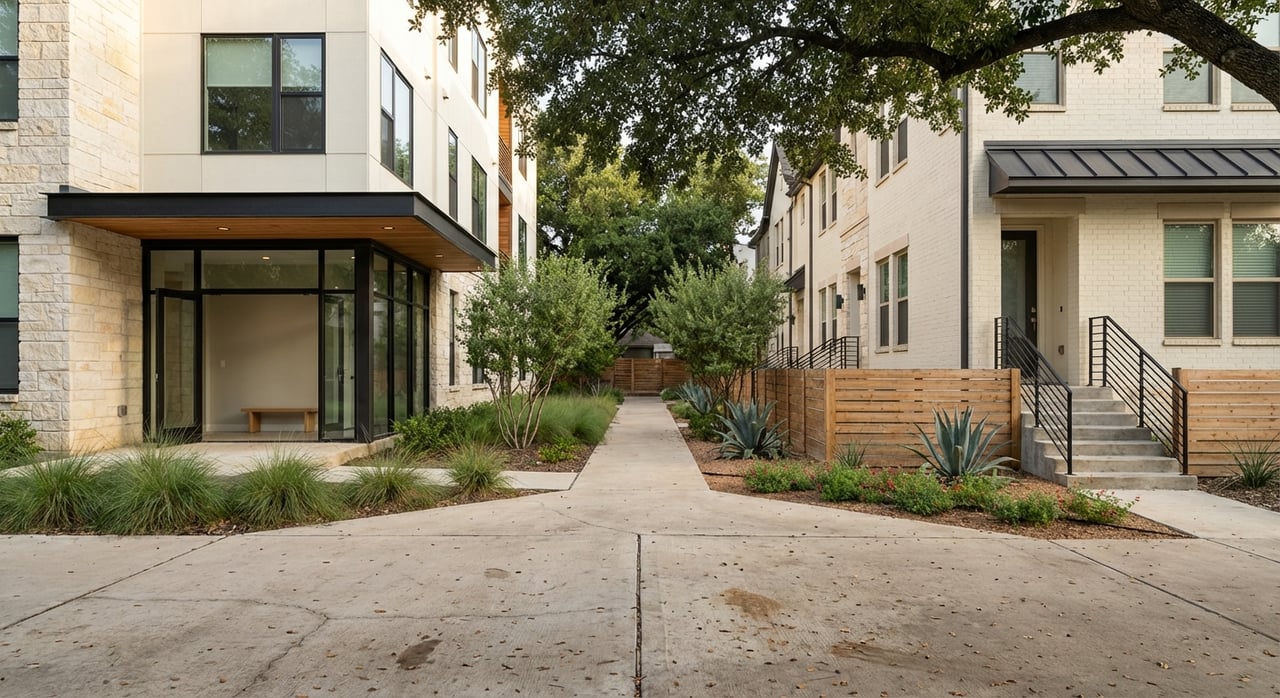
North Austin gives you a real side-by-side comparison between attached and detached living. The City of Austin’s North Burnet/Gateway plan covers about 2,300 acres and outlines a shift from older, low-density, auto-oriented development toward higher-density, mixed-use neighborhoods.
That matters because townhomes and condos are part of that future housing mix. In practical terms, North Austin is not just a market of one home type. It is a place where you are often choosing between convenience and control, not just square footage.
Townhome vs. house at a glance
Before you tour homes, it helps to frame the decision clearly. In North Austin, the better fit usually comes down to how you want to live day to day.
| Factor | Townhome | House |
|---|---|---|
| Exterior upkeep | Often lower | Usually owner-managed |
| Yard space | Typically smaller | Usually more usable space |
| Privacy | More shared walls or closer neighbors | More separation from neighbors |
| HOA involvement | Often more active | Often less, though not always |
| Exterior changes | May require approval | Usually more owner control |
| Location pattern | Common in denser corridors | Common in more traditional residential settings |
Maintenance and control
Townhomes often trade work for structure
If you want less exterior work, a townhome may feel appealing. In many townhome communities, some exterior maintenance and shared-area upkeep are handled through the property owners’ association, which can make ownership feel simpler on a daily basis.
The tradeoff is that this convenience usually comes with monthly HOA dues and more shared oversight. In Texas, a townhouse regime is one form of residential subdivision governed by a property owners’ association, and the exact maintenance split depends on the deed restrictions and community documents.
Houses often trade convenience for flexibility
A detached house usually puts more responsibility on you. That can mean more yard work, more exterior maintenance, and more planning when repairs come up.
But that extra responsibility often comes with more direct control. If you care about landscaping, exterior updates, or future improvements, a house may give you a simpler ownership experience with fewer layers of approval.
Privacy, noise, and outdoor space
Houses usually offer more separation
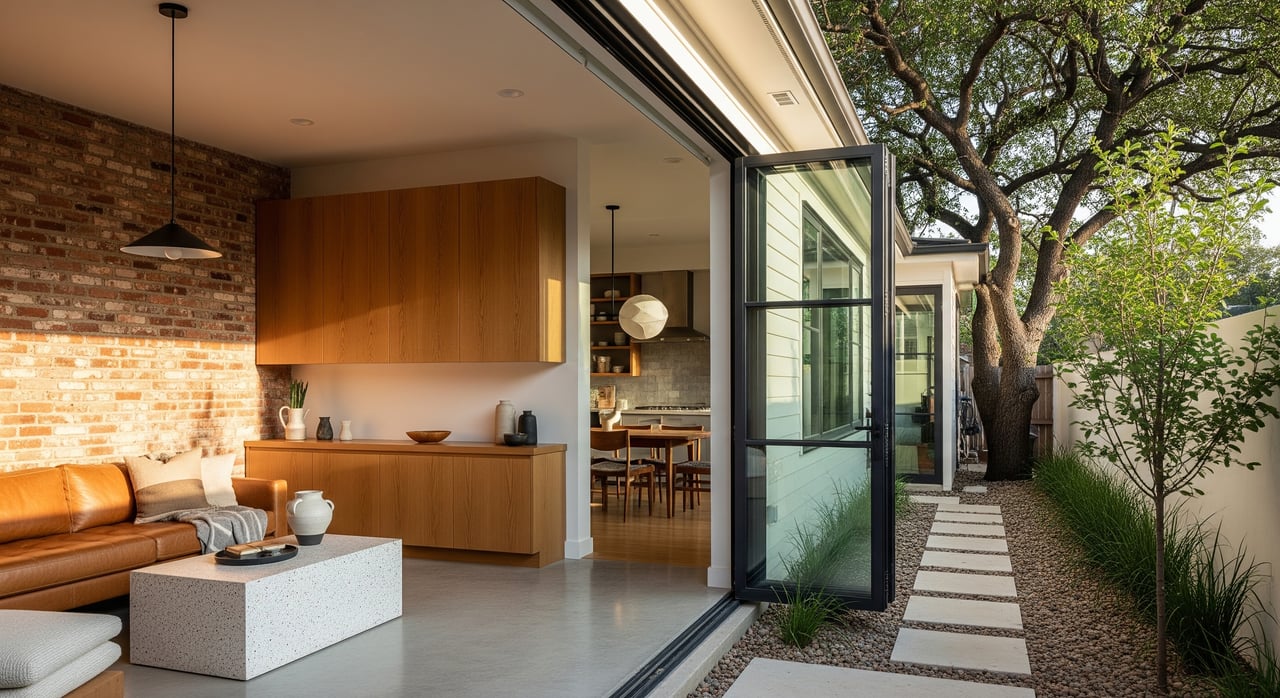
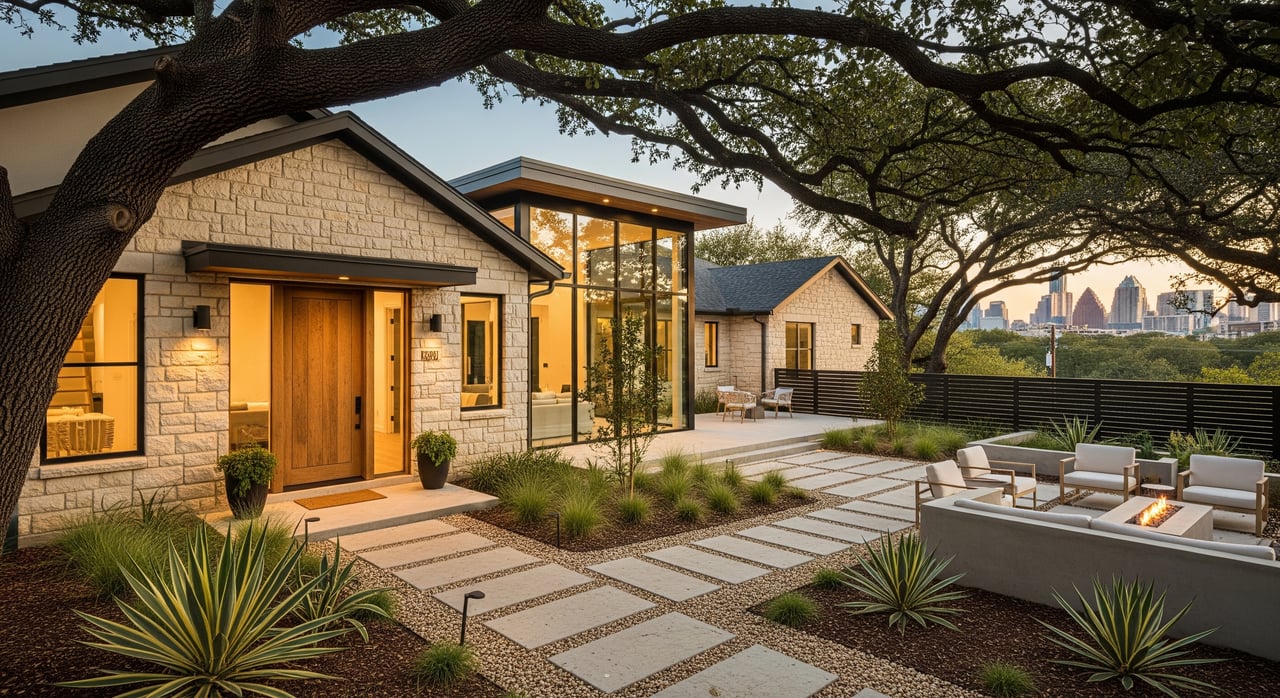
For many buyers, privacy is one of the biggest differences. A detached house usually provides more space between you and your neighbors, along with more yard area and a stronger sense of separation.
That can matter if you want room to garden, entertain outdoors, or simply enjoy a little more breathing room. It can also matter if you are sensitive to noise or prefer a more traditional residential feel.
Townhomes usually keep things compact
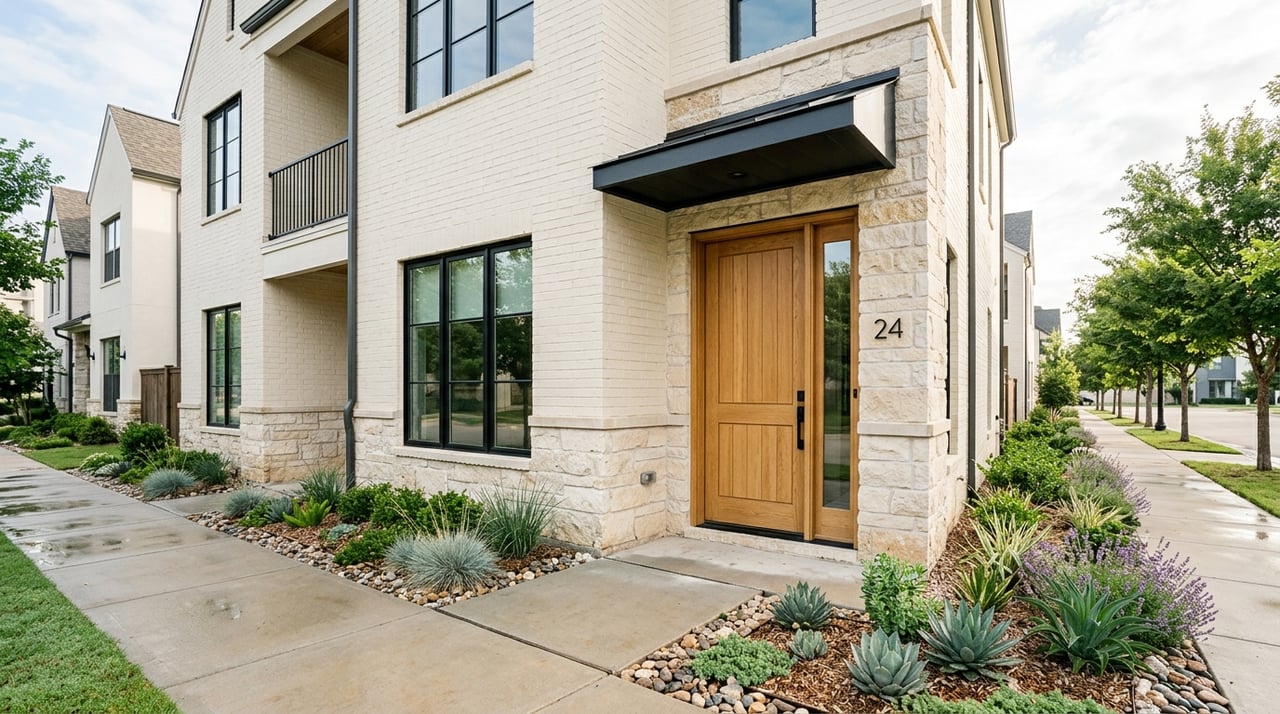
A townhome often comes with a smaller footprint and less land to maintain. For some buyers, that is a drawback. For others, it is exactly the point.
In denser parts of North Austin, especially in areas shaped by mixed-use growth, compact housing can offer a more streamlined lifestyle. If you would rather spend less time managing outdoor space, that tradeoff may feel worth it.
HOA rules can shape your experience
The documents matter more than the home type
It is easy to assume that every townhome comes with strict rules and every house comes with total freedom. In reality, the governing documents matter more than the label.
Texas law gives property owners’ associations real enforcement power, but it also requires certain procedures. Before an association can levy a fine or take some enforcement actions, it must give written notice, and owners may have a chance to cure the issue and request a hearing.
Ask how daily decisions are handled
If you are comparing homes, review how the HOA handles ordinary ownership questions. For example, ask whether exterior changes, fences, landscaping, or additions require approval.
This is where a house can feel simpler, especially if you do not want to navigate association constraints. But some detached homes also sit in HOA-managed communities, so it is important not to assume.
Rental plans and short-term flexibility
Future plans should shape today’s purchase
If there is any chance you may rent the property later, do not wait to investigate the rules. In North Austin, that question can be just as important as price or layout.
Texas law says an HOA may not require a lease applicant or tenant to be approved by the association or force the owner to submit a consumer report, credit report, or the rental application itself. Still, associations can enforce leasing and occupancy restrictions that appear in their governing documents.
Austin has short-term rental rules too
In Austin, residences rented for fewer than 30 consecutive days are licensed annually by the city. The city also sends notice to nearby properties when a short-term rental license is issued or renewed.
That means a townhome is not automatically better or worse for rental flexibility than a house. The real answer depends on the HOA documents and city rules that apply to the specific property.
Cost comparisons that matter
Look beyond the list price
Many buyers focus first on the purchase price, but that does not always reveal the better fit. A cleaner comparison is your monthly carrying cost plus the value of your time.
For example, a townhome may come with higher dues but lower day-to-day maintenance demands. A house may have lower or no HOA dues, but more direct upkeep costs and more time spent managing the property.
Property taxes work similarly if you qualify
Texas does not have a state property tax. Local taxing units set the rates.
In Travis County, an owner-occupied home may qualify for a homestead exemption that reduces taxable value. After you have owned and occupied the property for at least one calendar year, the assessed value increase is limited to 10% or the current market value, whichever is less. These rules can apply whether you own a townhome or a detached house, as long as the property qualifies as your homestead.
Insurance needs may differ
Insurance is another area where buyers should slow down and ask questions. Texas home insurance pays to repair or replace the house and personal property if a covered event causes damage.
For attached homes, the key issue is often the association’s master policy. The Texas Department of Insurance says condo insurance usually covers the contents of the unit and may also cover common property the owner is responsible for under the association’s rules. If you are buying an attached home, confirm exactly what the HOA policy covers and what you need to insure yourself.
A simple North Austin decision framework
If you want a clean way to sort your options, start with how you want your life to feel after move-in.
A townhome may fit better if you want:
- lower exterior upkeep
- a more compact footprint
- a home in a denser, mixed-use North Austin corridor
- a property that feels easier to lock and leave
A house may fit better if you want:
- more privacy
- more yard space
- more control over exterior changes and future improvements
- fewer association rules in daily life
Questions to ask at every showing
Whether you are touring a townhome or a detached home, these questions can save you from surprises later:
- What do the HOA dues cover?
- Has the HOA changed dues recently?
- What does the HOA master insurance policy cover?
- Are rentals capped or restricted?
- Are short-term rentals allowed by the HOA and by the City of Austin?
- Do exterior updates, landscaping changes, fences, or additions require approval?
The bottom line for North Austin buyers
In North Austin, the townhome-versus-house decision is usually a choice between convenience and control. Townhomes often work well for buyers who want lower-maintenance living and access to denser, mixed-use parts of North Austin, while detached houses often fit buyers who want more privacy, more land, and fewer association constraints.
The best move is not the one that looks better on paper in the abstract. It is the one that matches your budget, your future plans, and your tolerance for upkeep and rules. If you want a clear, data-driven read on which option fits your goals in North Austin, Christopher Harris Real Estate can help you evaluate the tradeoffs and move forward with confidence.
FAQs
Should I buy a townhome or a house in North Austin if I want less maintenance?
- A townhome may be the better fit if you want lower exterior upkeep, but you should review the HOA documents to see exactly what maintenance is covered.
Do North Austin townhomes always have stricter HOA rules than houses?
- Not always. Townhomes often have more active HOA oversight, but some detached houses are also in HOA communities, so the governing documents matter more than the property label.
Can I rent out a North Austin townhome or house later?
- Possibly, but you need to check both the HOA rules and City of Austin regulations, especially if you are considering short-term rentals of fewer than 30 consecutive days.
Are property taxes different for a North Austin townhome versus a house?
- The tax structure is not about townhome versus house by itself. In Travis County, either property type may qualify for a homestead exemption if it is owner-occupied and meets the requirements.
What should I ask before buying a townhome in North Austin?
- Ask what the HOA dues cover, what the master insurance policy covers, whether rentals are restricted, and whether exterior changes require approval.
Is a detached house better for privacy in North Austin?
- In general, yes. A detached house usually offers more separation from neighbors and more yard space than a townhome.