Could you live well in Austin with one car or none? If Mueller is on your shortlist, the answer might be yes. The neighborhood was planned so you can handle most of life on foot, by bike, or by bus, which can lower costs and stress. In this guide, you will see exactly how Mueller makes car-light living work, where the limits are, and how to test it before you commit. Let’s dive in.
Why Mueller supports car-light life
Mueller is a purpose-built, mixed-use neighborhood on the former Robert Mueller Airport site, created to deliver everyday convenience in a compact footprint. The master plan prioritizes walkability, transit access, and a true town center. You are about 3 miles from downtown and roughly 2 miles from UT Austin, which helps with biking and transit connections. The result is a place where many errands and social plans do not require a car. You can see the vision on the neighborhood’s official overview of Mueller’s plan and location.
Town center and daily errands
Aldrich Street is the neighborhood’s pedestrian-focused core. Restaurants, a movie theater, services, and ground-floor retail sit next to offices and homes, with short blocks that keep walks quick. Parking garages are tucked nearby for visitors, which keeps the sidewalks comfortable for walking. You can browse the anchors and eateries on the Mueller business directory, then map how far they are from a given home.
Parks, trails, and a bikeable loop
Mueller integrates about 140 acres of parks and open space, linked by greenways and paths that circle through the neighborhood. Project materials describe an eventual loop of roughly 5 miles and about 13 miles of pedestrian and bike paths when you include connections. That makes school drop-offs, short commutes, and weekend rides easier to do without a car. Explore upcoming events and the trail network on Mueller parks and events.
Grocery and weekly market within reach
An on-site full-service grocery is a major advantage for car-light life. The Mueller H-E-B at 1801 E. 51st St puts staples within a quick walk or ride, and it can anchor a weekly no-car routine. Confirm hours and services on the Mueller H-E-B store page. On Sundays from 10:00 to 2:00, the Texas Farmers’ Market at Branch Park Pavilion brings 100-plus vendors for produce and prepared foods. If you live near Aldrich Street, the market becomes an easy weekly habit. Check details on the Texas Farmers’ Market at Mueller.
Transit and bikeshare connections
CapMetro’s bus network serves the area along Manor, Airport, and Berkman, with links to downtown, UT, and the airport. In February 2025, CapMetro added Rapid 800 and Rapid 837 to improve eastside connectivity, with early schedules showing around 20 to 30 minute headways. These lines make cross-town trips more practical without a car. Review the network and plan specific rides on CapMetro bus services and the Rapid expansion.
For quick, flexible trips, the official docked bikeshare system provides e-assist bikes and station-to-station reliability. It pairs well with transit for first and last mile segments. See passes and station maps on CapMetro Bikeshare.
Reality check on walk, bike, and transit scores
Walk Score data around Mueller Lake shows a Walk Score near 79, a Bike Score in the high 70s, and a Transit Score in the mid 40s to 50 range depending on the exact point. That aligns with day-to-day experience. Many errands are a short walk or bike away, while some commutes and late-night trips still work better with a ride-hail or occasional car. Explore the area’s Walk Score snapshot.
A day without a car in Mueller
Picture this. You start with coffee on Aldrich Street, then walk to Lake Park for a quick loop. Mid-morning, you pick up groceries at H-E-B and stash them in a small rolling cart. After lunch, a bikeshare ride gets you to a meeting near UT. Later, you roll back into the town center for a movie and dinner.
On Sundays, you swap the grocery run for the Texas Farmers’ Market at Branch Park Pavilion and grab produce for the week. If friends visit, they can use the garages by Aldrich or park on-street. On major event days and market hours, plan a few extra minutes. It is still simple if you are walking or biking.
Who thrives with car-light life in Mueller
Single professional commuting to central Austin
If your job is in or near downtown, Mueller is a strong fit. The short distance to the core pairs well with a bike commute or a mix of bike and Rapid bus. Many offices are a one-seat or one-transfer trip on CapMetro. Check your schedule and route specifics on CapMetro bus services.
Family with young children
You will appreciate having parks, pools, a children’s museum, and the grocery nearby. Many weekday errands and playtime can happen on foot or by bike, which reduces stress. That said, you will likely still want a car for larger shopping trips, carpools, and appointments outside the neighborhood.
Remote or hybrid worker
This is an ideal setup. If most days are at home, you can handle groceries, coffee, fitness, and the occasional meeting without owning two cars. For cross-town sessions, pair bikeshare with a Rapid line or use ride-hail. Keep a plan for rare bulky hauls, like a short-term car rental or one small household vehicle.
Households with frequent bulky errands
If your weekly routine includes big-box shopping, specialized appointments across the metro, or off-hour shifts in areas with limited service, a car will still help. Mueller reduces many trips but does not eliminate the need for a vehicle in these cases. Think of it as car-light rather than car-free.
How to test it before you move
Use this step-by-step checklist to confirm fit.
- Map your daily loop. Walk your likely routes on a weekday and a weekend: Aldrich Street to H-E-B to Lake Park and back. If these feel like 10 to 20 minute walks from a candidate home, car-light living is realistic. Use the Mueller business directory to target your stops.
- Time your commute. Use CapMetro’s planner to test real trips during your commute windows. Look for one-seat rides or simple transfers on the network and the Rapid lines. Start with the bus services overview.
- Try bikeshare. Buy a short pass and test an e-assist ride toward downtown or UT at your likely times. Confirm station availability near your start and end points. Details are on CapMetro Bikeshare.
- Rehearse a grocery routine. Visit the Mueller H-E-B on a typical evening and the Texas Farmers’ Market on Sunday. Decide if a small cart, delivery, or a monthly car trip makes sense for bulk items.
- Plan for the rare car need. Budget for a rental or keep one small vehicle for weekend getaways and bulky errands. Many neighbors describe this as the right balance for Mueller.
Cost and housing choice implications
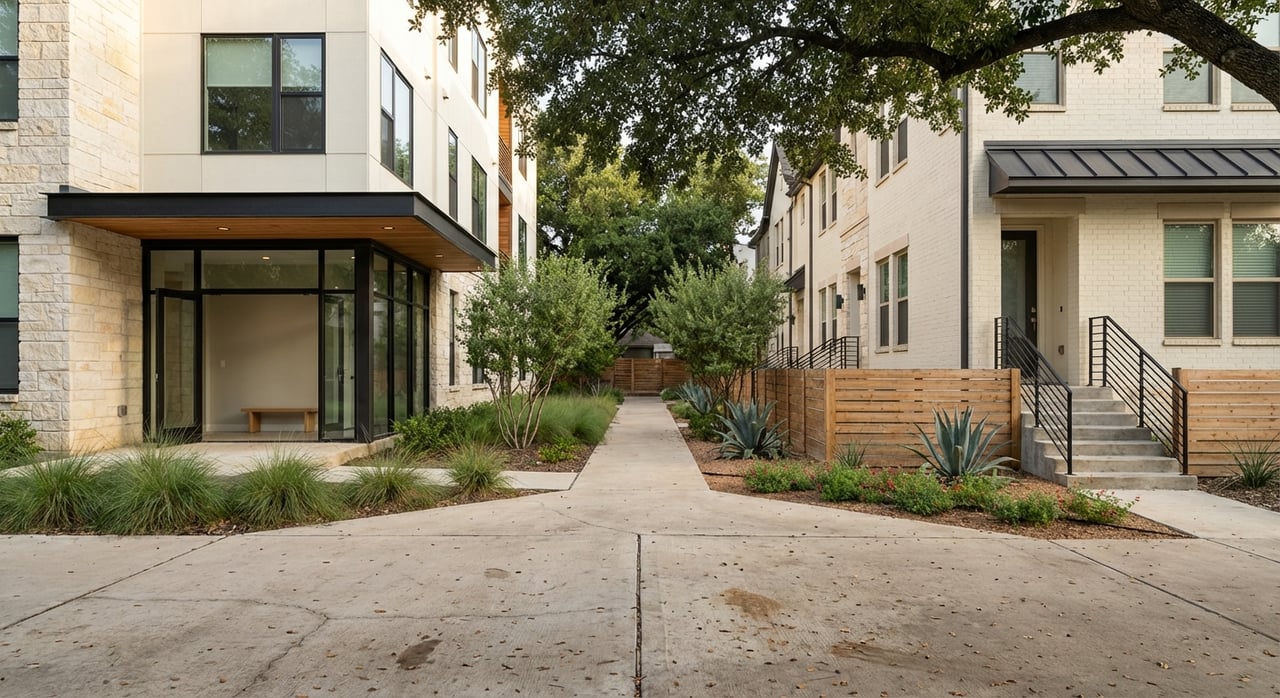
Mueller offers a mix of condos, townhomes, and single-family homes, along with newer multifamily buildings. Public market snapshots show prices above many East Austin averages, with condos and townhomes typically below detached single-family in the neighborhood. Expect a wide range, often from the mid-hundreds to high six figures for many units, and single-family options that can reach 800,000 to 1 million plus depending on size and finish. Use current MLS data for precise comps and trends.
From a mobility standpoint, where you live in Mueller matters. Condos and apartments closest to Aldrich Street make it easiest to go car-light since your daily walk is shortest. Larger single-family homes farther from the town center can still work well if you choose an address within a comfortable walk of H-E-B, parks, and key bus stops.
Pro tips for a smooth car-light setup
- Start with one car. Shift 60 to 80 percent of errands to walking or biking, then reassess your needs.
- Invest in small gear. A foldable cart, a sturdy backpack, and good bike lights stretch how much you can do without driving.
- Batch bulky runs. Do a monthly car trip for paper goods and pantry restocks, then keep weekly produce hyper local with H-E-B and the Sunday market.
- Know your event rhythm. On market days and big park events, expect tighter parking for visitors. If you are local, walking or biking is still the fastest way to go.
The bottom line
Mueller was engineered to make car-light living practical. A real town center, a full-service grocery, a weekly market, connected parks and trails, and improved transit combine to shrink your daily driving. It is not perfect for every lifestyle, but if your routines align with Aldrich Street and you are open to bikeshare, Rapid bus rides, and the occasional rental, you can free yourself from many car trips.
If you want tailored advice on homes and locations within Mueller that make this lifestyle easiest, reach out. Christopher Harris Real Estate will help you test commutes, shortlist the best micro-locations, and compare costs so you can move with confidence.
FAQs
Is Mueller truly car-free or just car-light?
- For most households it is car-light. The town center, grocery, parks, bikeshare, and new Rapid lines reduce many trips, but bulky errands and late-night travel often still benefit from a car or ride-hail.
How do the new Rapid 800 and 837 lines help?
- CapMetro launched these routes in February 2025 to improve eastside connectivity, with early headways around 20 to 30 minutes. They make more one-seat or one-transfer trips realistic for work and errands.
How far is Mueller from downtown Austin and UT?
- Mueller is about 3 miles from downtown and roughly 2 miles from UT Austin, which supports biking and faster transit links for many commutes.
Where can I buy groceries without driving?
- The on-site Mueller H-E-B at 1801 E. 51st St handles full-service grocery needs, and the Sunday Texas Farmers’ Market at Branch Park Pavilion offers fresh produce and prepared foods.
How walkable and bikeable is the neighborhood?
- Walk Score around Mueller Lake is about 79 for walking, with bike scores in the high 70s, and a lower transit score that varies by location. That matches the day-to-day reality of easy local errands plus selective transit use.
What about visitor parking and event days?
- Aldrich Street and Lake Park have garages and on-street options. The farmers market and some events attract citywide visitors, so locals often find walking or biking faster during peak times.